Roof Flashing Types: Where, Why, and How They Protect Your Roof
When heavy rain pounds your roof, you expect to stay dry inside. But even the toughest shingles or tiles are no match for water sneaking into cracks and seams. That’s where roof flashing steps in—a silent defender that keeps leaks at bay and peace of mind overhead.
At KRB Contractors Roofing, we’ve seen time and again how a tiny bit of metal, properly installed, can mean the difference between a cozy home and a ceiling stained with regret. Understanding flashing isn’t just for roofers; homeowners and building managers can save real money and headaches by knowing what protects their property.
What Is Roof Flashing? 🛡️
Think of roof flashing as an umbrella for the most vulnerable parts of your roof. It’s usually thin, shaped metal or flexible material that directs water away from joints, seams, and gaps—anywhere two different surfaces meet.
Without flashing, water would find its way into the smallest cracks. Over time, this can rot wood, cause mold, ruin insulation, and damage walls. The International Residential Code (IRC) requires flashing to prevent just that.
In short: Flashing bridges the gap between water and your living space.
Where Roof Flashing Works Its Magic
You don’t need to be a pro to spot the most important places for flashing. Here are the main battlegrounds where flashing is essential:
- Valleys: Where two roof slopes meet, forming a trough.
- Chimneys: Around the base and sometimes up the sides.
- Vents and pipes: Any hole punched through the roof.
- Skylights: Both around and above the glass.
- Roof edges: Eaves, rakes, and where the roof meets a wall.
If you’ve ever noticed water stains near these spots indoors, flashing may be missing or failing.
Types of Roof Flashing by Location
Let’s break down the main flashing styles by where they’re used. Each type fights leaks in its own way.
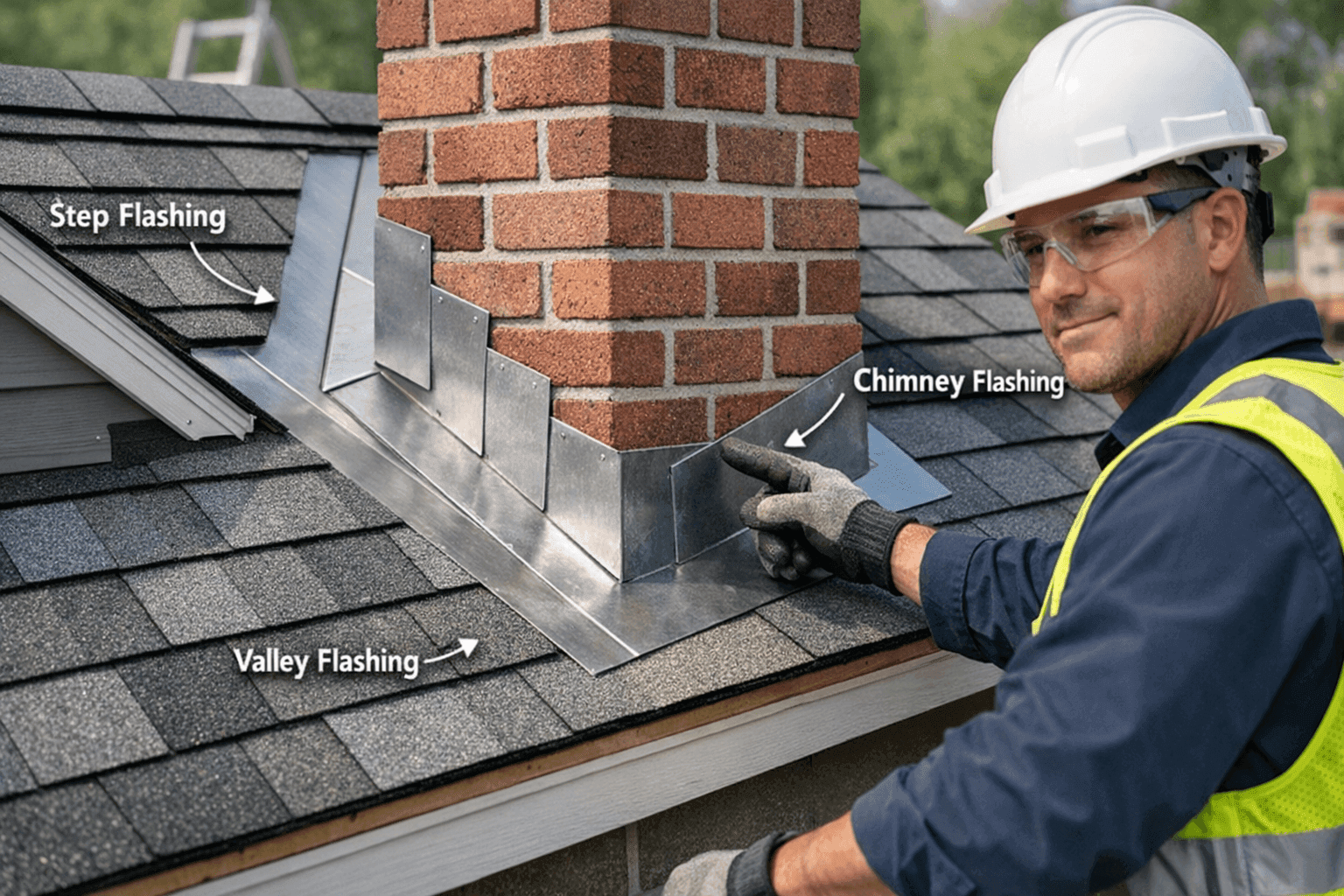
Valley Flashing
Picture a mountain stream—water always finds the path downward. Valleys on your roof do the same. Valley flashing is a long strip, often V-shaped, that channels water along the intersection and safely off the roof.
Step Flashing
Where a roof meets a wall—like at a dormer or side of a chimney—step flashing is installed in a stair-step pattern. Each “step” overlaps the shingle below and tucks under siding or masonry. It’s like shingling with metal.
Chimney Flashing
Chimneys need extra care. Here, three types of flashing work together:
- Base flashing sits at the bottom.
- Counter-flashing is embedded into the chimney’s mortar.
- Cricket flashing (for wider chimneys) diverts water around the back.
When done right, it’s a fortress. Problems here often mean big leaks, so regular Chimney Flashing checks are vital.
Vent Pipe and Skylight Flashing
Every pipe or skylight is a hole in your roof. Flashing forms a tight, waterproof seal around these spots with pre-formed collars or custom-bent metal.
Materials Used for Roof Flashing
Not all flashing is created equal. The right material depends on your roof, climate, and budget. Here are the most common options:
- Aluminum: Light, flexible, and rust-resistant. Great for most homes. It’s easy to cut and shape but should be coated if touching concrete or masonry.
- Galvanized steel: Strong and affordable. It’s treated to resist rust but can corrode over time, especially if scratched.
- Copper: The Cadillac of flashing. Lasts decades and looks beautiful as it ages. More common on higher-end homes or historic buildings.
- Lead: Flexible and durable, but less common today due to health and environmental concerns.
- Plastic or rubber: Used for some vent pipes and modern skylights. Can be less durable than metal, but easier to shape.
Building codes (like the IRC and NRCA guidelines) usually require metal flashing for critical areas. Always check local regulations when repairing or replacing flashing.
How Roof Flashing Is Installed
Proper flashing installation is part craft, part science. Here’s a peek at the process:
- Surface prep: Old materials and debris are cleared away.
- Cut and shape: Flashing is measured and cut to fit perfectly.
- Layering: Each piece is overlapped so water runs down and off—never behind.
- Fastening: Nails or screws are placed where water can’t reach them, then sealed.
- Sealing: Edges are sealed with roofing cement or compatible caulk.
Pro tip: Never let sealant be your only line of defense. Metal flashing should do the heavy lifting; caulk is just backup.
Maintenance and Inspection: Keeping Leaks Away 🔍
Even the best flashing won’t last forever. Sun, wind, and weather all take their toll. Here’s how to keep things watertight:
- Look for rust, cracks, or loose sections during seasonal checkups.
- Check after major storms—wind can lift or bend flashing.
- Remove debris that could trap water or ice against flashing.
- Inspect attic ceilings for stains—a hidden sign of flashing failure.
If you spot trouble, small fixes now can save huge headaches later. For serious issues, or if you’re unsure, call a professional for Leak Repair.
The Flashing Safety Checklist
Before you grab a ladder, run through this quick safety list:
- Wear non-slip shoes and use a sturdy, stable ladder.
- Avoid working on steep or wet roofs.
- Watch out for overhead power lines.
- Never step directly on flashing—it can bend or slip.
- If heights or roofs make you nervous, hire a pro. Your safety is priceless.
DIY or Call a Pro? Knowing Your Limits
Some flashing jobs, like resealing a vent pipe, can be a decent weekend project for a handy homeowner. But tackling chimney flashing, valley repairs, or anything on a steep roof? That’s like trying to change your own brakes on a moving car.
Consider calling a roofing contractor if:
- The leak is hard to find.
- You’re unsure about materials.
- The repair involves chimneys, valleys, or large roof areas.
What Pros Do When They Arrive
A seasoned roofing crew brings more than tools—they bring trained eyes. Here’s what happens:
- They inspect all potential leak points, not just the obvious ones.
- Materials are matched for durability and appearance.
- Old, damaged flashing is removed completely.
- New flashing is installed with proper overlaps and secure fastening.
- All work is checked against building codes and manufacturer specs.
Prevention: The Best Insurance for Your Roof
A little care goes a long way. Here’s what you can do:
- Schedule annual roof inspections, especially after severe weather.
- Keep gutters and downspouts clear—backed-up water can damage flashing.
- Replace worn caulk or sealant promptly.
- Trim back branches that could rub or damage flashing in a storm.
Common Flashing Mistakes to Avoid ⚠️
It’s easy to get it wrong if you’re not careful. Watch out for:
- Using the wrong material (e.g., steel that will rust in a salty climate).
- Skipping the overlaps—water finds every gap.
- Relying too much on caulk instead of solid, shaped flashing.
- Forgetting to check hidden areas like valleys or under shingles.
- Ignoring small rust spots or loose nails.
Mistakes often mean bigger leaks later. Quality counts.
Signs of Flashing Trouble
Stay alert to these warning signs:
- Water stains on ceilings or walls near roof edges.
- Drips or dampness in the attic after rain.
- Visible gaps, rust, or bent metal on the roof.
- Shingles curling near flashing.
- Mortar cracks around chimneys.
Catch these early, and you’ll avoid most major repairs.
Flashing and Roof Types: Special Considerations
Flashing isn’t one-size-fits-all. For example:
- Tile Roofing near you needs custom-shaped flashing to fit under tiles.
- Metal Roofing uses special “Z” or “J” profiles for tight seals.
- Flat Roofs often use wider, flexible membranes for seams and edges.
- Shingle Roofing relies on stepped and L-shaped pieces.
If you’re unsure what’s right for your home or building, ask during your next inspection.
Flashing Costs, Time, and Disruption
Nobody loves surprise repairs. Here’s what to expect:
- Cost: Simple fixes (like resealing a vent) are modest. Chimney or valley repairs can be more, especially if damage is widespread.
- Time: Most jobs take a few hours. Big projects, like full roof replacement, may run a day or two.
- Disruption: Quality crews work cleanly and safely. You might hear footsteps or hammering, but a good team leaves no mess behind.
Planning ahead, especially with regular maintenance, keeps costs and disruption down.
Frequently Asked Questions About Roof Flashing
Q: How long does flashing last?
A: Most metal flashing lasts 15–30 years, but exposure and installation quality matter.
Q: Can you reuse old flashing?
A: It’s rarely a good idea. Old flashing can be weakened or bent, making it less effective.
Q: Is flashing always visible?
A: Not always. Some styles are tucked under shingles or siding, so only a sliver shows.
Q: Who inspects flashing?
A: Roofing specialists, home inspectors, or building managers, depending on your situation.
When Flashing Repairs Become an Emergency 🚨
Sometimes, a flashing leak goes from nuisance to nightmare fast. If you notice:
- Water pouring in during a storm
- Large sections of flashing missing after wind
- Sudden stains or bubbling paint
Don’t wait. Call for emergency roofing services right away. Fast action can save thousands in water damage.
Final Word: Protect Your Roof, Protect Your Home
Roof flashing might seem small, but it’s a giant when it comes to defending your home or business. Whether you’re maintaining a cozy bungalow or a bustling commercial property, the right flashing keeps you dry and comfortable, year after year.
If you’re unsure about your flashing, have questions about materials, or need a careful inspection, our team at KRB Contractors Roofing is here to help.
Call KRB Contractors Roofing now — or reach us anytime at 855-528-1936 .