Roof Flashing Explained: Common Problems and Repair Solutions
Water stains creeping down your walls. That slow, persistent drip after every rain. For many homeowners and property managers, roof leaks seem to strike out of nowhere. Often, the real culprit is roof flashing—a hidden hero silently defending your building against water intrusion.
At KRB Contractors Roofing, we’ve seen how just a sliver of bent metal or a lifted edge can spell the difference between peace of mind and costly repairs. Let’s break down the basics, show you where trouble hides, and arm you with practical solutions to keep your roof dry season after season.
What Is Roof Flashing? 🏠
Picture flashing as the raincoat of your roofing system. It’s typically made of thin metal—aluminum, galvanized steel, or even copper—and is installed wherever the roof meets a vertical surface or a joint. Think of places where water likes to sneak in: chimneys, vents, skylights, valleys, and edges.
Flashing acts as a barrier, directing water away from vulnerable seams. Without it, even the best shingle or tile roofing near you can turn into a sieve. Properly installed flashing is essential for both residential and commercial roofs, no matter the material.
Types of Flashing You’ll Find on a Roof
Not all flashing is created equal. Different areas call for different shapes and installation techniques:
- Step flashing: Used where the roof meets a vertical wall, like dormers and chimneys.
- Continuous (apron) flashing: Runs along the edge where a vertical wall meets a sloped roof.
- Valley flashing: Protects the troughs where two roof planes meet.
- Vent pipe flashing: Seals around plumbing pipes poking through the roof.
- Chimney flashing: Wraps around the chimney base, often in multiple pieces.
- Drip edge flashing: Installed along eaves and rakes to guide water into gutters.
Each type has a specific job. If one fails, the domino effect can be quick and merciless.
Where to Look: High-Risk Areas for Flashing Problems
Flashing is easy to overlook—until it isn’t. Here’s where to check first:
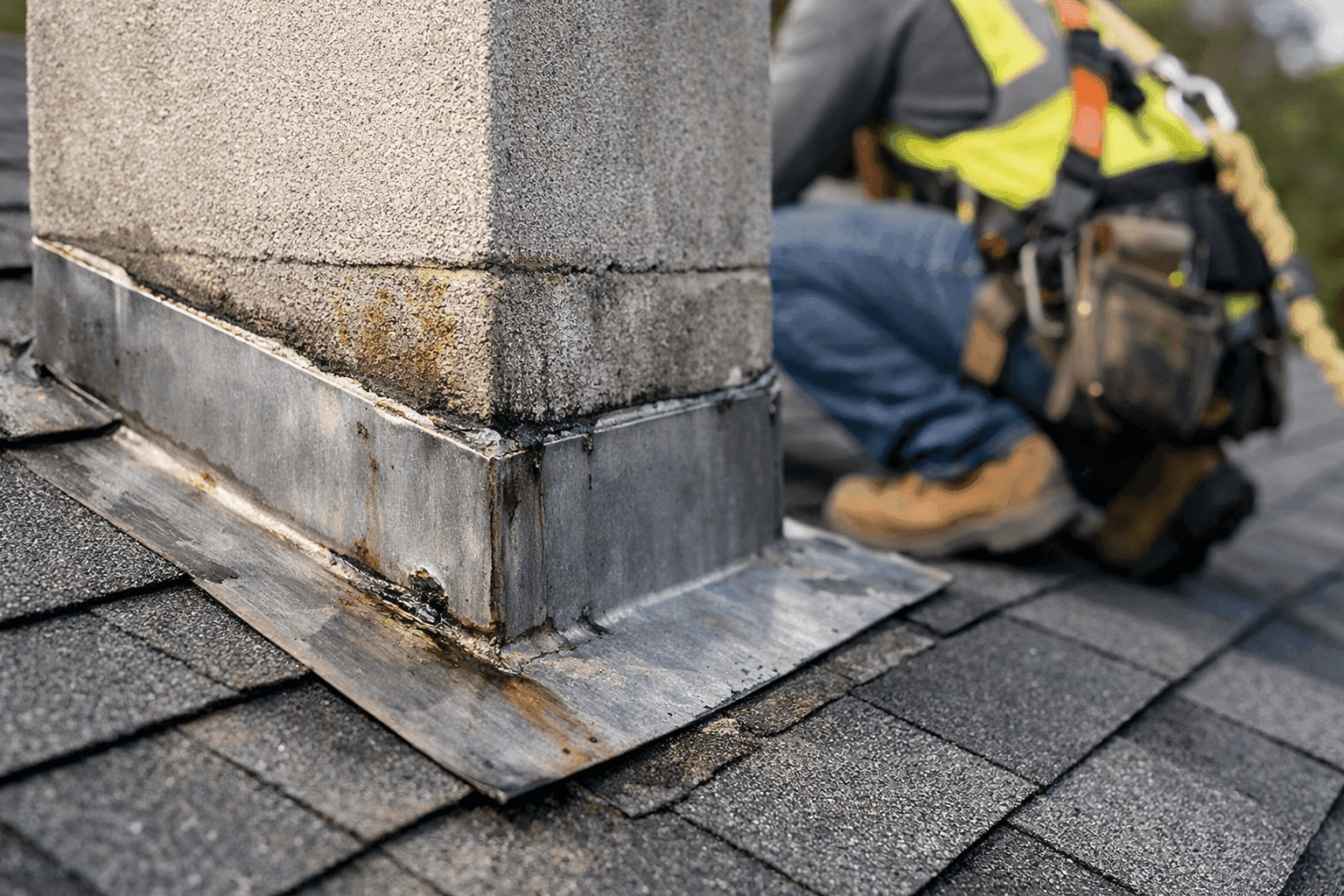
- Chimneys: Cracks, gaps, or rusted metal around the base are common trouble spots. Chimney Flashing requires special skill to install and repair.
- Roof valleys: Debris and pooled water wear down valley flashing faster than other spots.
- Vent pipes and skylights: Rubber boots shrink and crack with age, letting water sneak in.
- Roof edges and eaves: Drip edges can lift in high winds or sag from ice buildup.
- Wall intersections: Where roof meets wall, step flashing can come loose or slide out of place.
If you spot rust, curling, or discoloration around these areas, it’s time to investigate further.
Common Flashing Failures and What Causes Them
Even tough metal has its limits. Here’s what can go wrong:
- Improper installation: Skipped steps, missing sealant, or wrong-sized flashing lead to early failure.
- Corrosion and rust: Metal exposed to moisture and air will eventually break down.
- Physical damage: Tree limbs, hail, or even foot traffic can bend or dislodge flashing.
- Aging and weathering: Temperature swings cause metal to expand and contract, loosening fasteners.
- Roof movement: Settling or structural changes can pull flashing out of alignment.
When flashing fails, water finds a way. Fast.
How to Spot Flashing Damage Before It Wrecks Your Roof 👀
Catch problems early, and you’ll save a bundle. Here’s what to watch for:
- Water stains: Brownish marks on ceilings or walls near fireplaces and skylights.
- Visible gaps or lifting: Flashing that’s popped up or pulled away from the surface.
- Rust or corrosion: Discoloration, flaking, or holes in metal sections.
- Mold or mildew: Persistent dampness in attic corners.
- Damaged shingles or tiles nearby: Sometimes the first sign is roof material buckling around the flashing.
If you’re comfortable with a ladder and basic safety, do a visual check twice a year—especially after storms.
Quick Safety Checklist for Roof Inspections
Before climbing up, run through this mental list:
- Wait for dry, calm weather—never inspect in rain or high wind.
- Wear rubber-soled shoes and avoid loose clothing.
- Use a sturdy, properly placed ladder.
- Never walk on steep or fragile roofs.
- If in doubt, stay safe and call a professional.
Remember, safety first. The view isn’t worth a trip to the ER.
When Should You DIY—and When to Call a Pro?
Some minor flashing repairs are a good fit for handy homeowners. Re-sealing a small gap with roofing caulk? Manageable. Replacing a single piece of loose step flashing? Possible, if you’re comfortable with heights and tools.
But if you spot widespread rust, water inside your ceiling, or damage around a chimney or valley, it’s time to call a roofing contractor. Flashing mistakes can void warranties or even violate building codes (see International Residential Code R903.2.1 for flashing requirements). Don’t risk it for a quick fix.
What Pros Do When They Arrive
At KRB Contractors Roofing, our first step is always a thorough inspection. We check:
- The condition of all flashing types and adjacent roof materials.
- Signs of hidden water intrusion inside attics or walls.
- Proper overlap, fastener placement, and sealant integrity.
Next, we recommend targeted repairs, from roof flashing repair to leak repair or even full replacement if damage is severe. We use code-compliant materials and proven installation techniques to give your roof a fighting chance against the elements.
Professional Repair Solutions: What’s Involved
Depending on the issue, repairs may include:
- Patching holes or cracks: Using compatible metal patches and high-grade sealant.
- Re-securing loose flashing: Fasteners are replaced, and edges re-sealed.
- Replacing sections: Damaged flashing is cut out and new pieces are installed with precise overlaps.
- Upgrading sealants: UV-resistant, flexible sealants are applied to edges and joints.
- Addressing underlying issues: Sometimes, the problem isn’t just the flashing—rot, missing underlayment, or clogged gutters can contribute.
Well-done repairs blend seamlessly with existing roofing, preserving both function and curb appeal.
Prevention & Maintenance: Keeping Water Out Long-Term 🛡️
Want to avoid leaks altogether? A bit of prevention goes a long way:
- Schedule annual roof inspections—especially after heavy storms or high winds.
- Keep gutters and downspouts clear to prevent water backup.
- Trim overhanging tree branches that could scrape or drop debris.
- Check attic ventilation and insulation to minimize condensation near flashing.
- Watch for signs of animal activity—nests can dislodge flashing faster than you’d think.
Regular professional maintenance can catch small issues before they become expensive headaches.
Costs and Time Factors: What to Expect
Flashing repair costs depend on the location, extent of damage, and materials. Simple patching may take an hour or two; chimney or valley flashing replacement can take half a day or more. Material choice—galvanized steel versus copper, for example—impacts price but also longevity.
For a detailed quote, it’s best to have a roofing specialist assess your unique situation. Quality flashing repair is an investment that pays off by extending your roof’s life and protecting what’s beneath it.
When It’s an Emergency (and What to Do Next)
If you see active water pouring in during a storm, act fast:
- Place buckets or tarps to catch water and protect valuables.
- Call for emergency roofing services right away.
- Avoid climbing on the roof in hazardous weather.
Time is critical. Even a short delay can lead to soaked insulation, mold, and costly interior repairs.
Seasonal Considerations: Flashing Under Fire
Your roof faces different challenges in every season:
- Winter: Freeze-thaw cycles can pop flashing loose and create ice dams.
- Spring storms: Heavy rain puts every seam and joint to the test.
- Summer sun: UV rays break down sealants, causing cracks and shrinkage.
- Autumn leaves: Clogged gutters overflow, soaking flashing at the eaves.
Inspect and maintain flashing at the start of each season to stay ahead of problems.
Common Mistakes to Avoid
- Using roofing cement alone instead of proper flashing—temporary at best.
- Overlapping flashing incorrectly, letting water sneak behind.
- Relying on caulk to fix severe rust or holes.
- Ignoring manufacturer guidelines for material compatibility.
- Skipping regular inspections.
Shortcuts today mean bigger problems tomorrow. Stick to proven methods for lasting protection.
FAQs About Roof Flashing
How long does roof flashing last?
With quality materials and installation, flashing can last 20 years or more—but local climate and maintenance matter.
Can I paint roof flashing to match my roof?
Yes, but use paint approved for metal and roofing use. Paint won’t fix rust or structural problems.
What’s the difference between roof flashing and drip edge?
Drip edge protects eaves and rakes, while flashing is used at joints and penetrations. Both work together to keep water out.
Local Know-How: Why It Matters
Every region has its quirks—humidity, salt air, freeze-thaw cycles. That’s why working with a local roofing contractor means solutions tailored to your climate and building codes. KRB Contractors Roofing brings experience across all roofing types, from residential tile to commercial flat roofs.
Extend Your Roof’s Life—Start with Flashing
A healthy roof starts at the seams. Whether you’re checking your own flashing or need help with a stubborn leak, KRB Contractors Roofing is ready to help. Don’t let small issues grow into big repairs. If you have questions about flashing, leaks, or anything roofing-related, reach out today.
Call KRB Contractors Roofing now — or reach us anytime at 855-528-1936 .