Residential Roofing: What Every Homeowner Needs to Know
Owning a home comes with plenty of rewards—and a few responsibilities you can’t ignore. One of the most important? Your roof. Think of your roof as your home’s armor, bracing against sun, rain, hail, and wind every day. When it’s strong, you barely notice it. When it’s not, every drip and draft is a red flag.
At KRB Contractors Roofing, we know a little prevention goes a long way. Whether you’re new to homeownership or a seasoned pro, understanding the basics of residential roofing helps you protect your biggest investment—your home.
What Is Residential Roofing? 🏠
Residential roofing is more than just shingles overhead. It’s a system—layers working together to keep your home dry, comfortable, and energy-efficient. Under the visible shingles or tiles, there’s decking, underlayment, flashing, and ventilation. Each part matters.
While commercial roofs might be flat and built for foot traffic, residential roofing usually means sloped designs that shed water fast. These sloped systems need the right materials and care to last—whether you have clay tiles, asphalt shingles, or metal panels.
If you’re searching for “Tile Roofing near you,” remember: every home’s needs are unique. The right solution is about more than looks.
Material Choices: What’s Over Your Head?
You wouldn’t wear a winter coat to the beach. Your roof needs the right material for your climate, budget, and style.
Common residential roofing materials:
- Asphalt Shingles: Popular for affordability and a classic look. Easy to repair and replace.
- Tile Roofing: Durable against harsh weather, fire-resistant, and long-lasting. Heavier—may need reinforced decking.
- Metal Roofing: Sleek, lightweight, and energy-efficient. Often lasts 40+ years.
- Wood Shakes: Beautiful but needs regular care and isn’t ideal in fire-prone areas.
- Synthetic Options: Mimic natural materials with less upkeep.
Pro Tip: Ask about eco-friendly options. Cool roofs, recycled materials, and solar-integrated designs can cut energy bills and reduce your carbon footprint.
Maintenance Schedules: The Simple Secret to Longevity
Think of roof maintenance as a tune-up for your car. Skip it, and you’ll pay more down the road.
Seasonal roof care checklist:
- Inspect for loose or broken shingles after storms.
- Clean gutters and downspouts every spring and fall.
- Check attic for leaks or damp insulation.
- Trim overhanging branches.
- Look for cracked sealant or flashing.
Schedule Residential Roofing at least once a year—or after severe weather. The National Roofing Contractors Association recommends regular professional assessments to catch small problems before they become big headaches.
Common Issues: What Can Go Wrong?
Roofs are tough, but not invincible. Here’s what can chip away at your peace of mind:
- Leaks: Water stains on ceilings or walls are red flags. Causes include cracked flashing, missing shingles, or clogged gutters.
- Storm Damage: Hail, wind, and flying debris can break tiles or lift shingles.
- Moss & Algae: Green patches mean moisture is sticking around—bad news for your roof’s lifespan.
- Sagging: This could be a sign of deteriorated decking or hidden water damage.
- Poor Ventilation: Trapped heat and moisture can warp materials and spike your energy bills.
Quick Safety Checklist: Before You Climb
Tempted to check the roof yourself? Pause. Roofs can be slippery and unpredictable.
Safety first:
- Use a sturdy ladder on flat ground.
- Never inspect in wet or icy conditions.
- Wear shoes with good grip.
- Keep someone nearby in case you need help.
When in doubt, call a professional. It’s not worth risking a fall for a better view.
DIY vs. Call a Pro: Know Your Limits
Some tasks—like cleaning gutters—are safe for handy homeowners. But for most roof repairs, it’s best to leave it to trained crews. Professional roofers have the right gear, know-how, and insurance for safe, lasting fixes.
DIY-friendly:
- Removing debris from gutters.
- Checking attic for dampness.
- Spotting visible shingle damage from the ground.
Call a pro for:
- Leak detection and repairs.
- Replacing shingles or tiles.
- Flashing, skylight, or chimney repairs.
- Roof Repair after a storm.
What Pros Do on Arrival
When you schedule a visit, here’s what to expect:
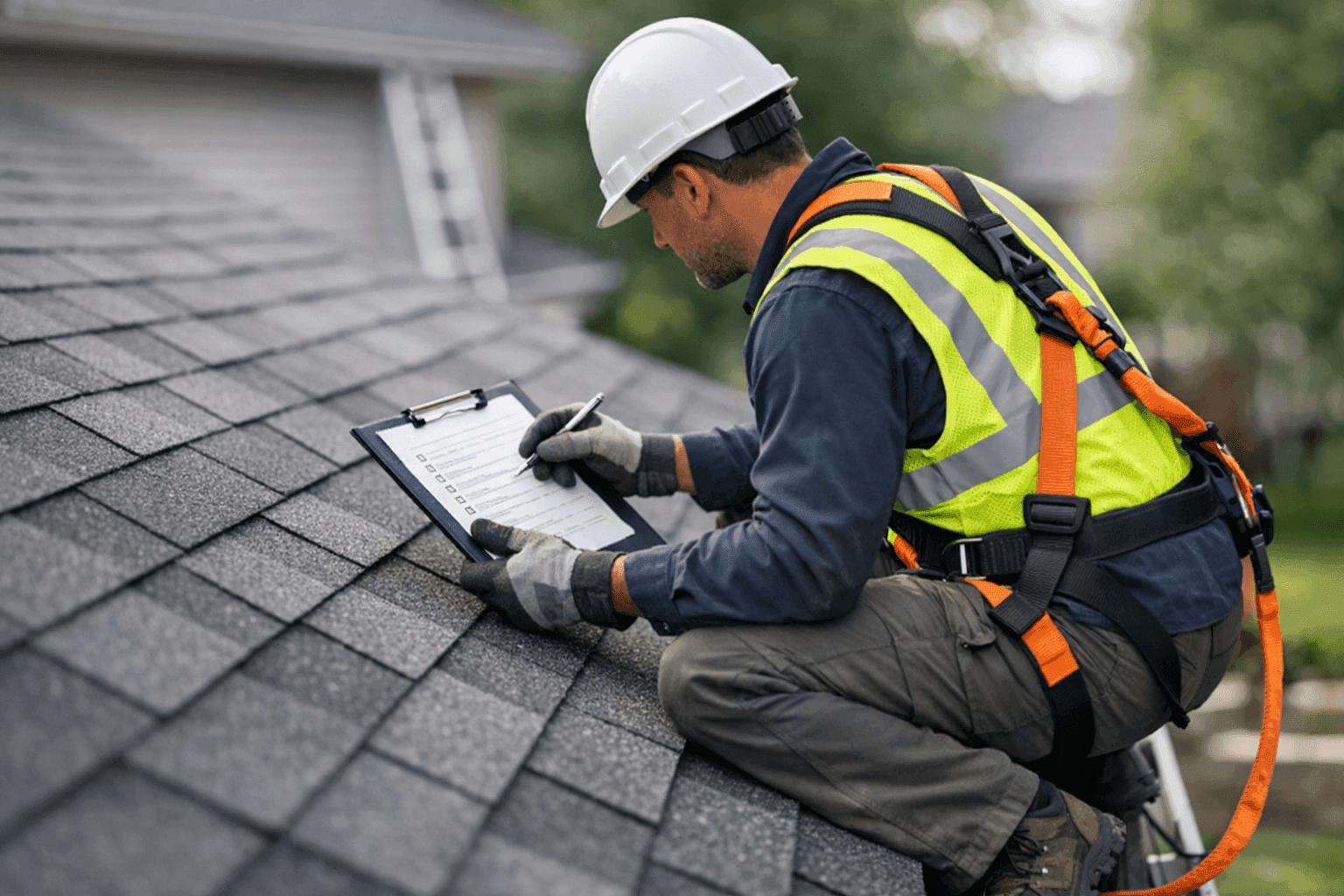
- Inspection: Pros start with a full walk-around, looking for obvious and hidden trouble.
- Documentation: Photos and notes for your records (and insurance, if needed).
- Assessment: Honest feedback about repair vs. replacement.
- Estimate: Clear, written explanation of what’s needed—and why.
A reputable roofing company follows OSHA safety standards and local building codes. This means safe work, proper permits, and quality that lasts.
Prevention & Maintenance: Habits That Save You Money 💡
A little effort now saves big headaches later. Here’s how to keep your roof healthy:
- Trim Trees: Falling branches are a roof’s worst enemy.
- Clean Gutters: Water needs a clear path to flow away.
- Check for Animal Intruders: Squirrels and birds love to nest in loose soffits or vents.
- Watch for Ice Dams: In cold climates, proper insulation and ventilation prevent damaging ice buildup.
Schedule regular roofing services to keep your roof in top shape year after year.
Costs & Time Factors: What to Expect
No two roofs are the same. Costs depend on material, size, pitch, and needed repairs. Here’s a rough breakdown:
- Minor repairs: Patching a leak or replacing a few shingles can take a few hours.
- Full replacements: May last a few days, depending on weather and material.
- Material choices: Asphalt shingles are often less expensive than tile or metal, but may need more frequent replacement.
Ask for a written estimate and be wary of anyone who quotes without inspecting your roof first.
When It’s an Emergency: Acting Fast
Some issues can’t wait. If you spot water pouring in, missing shingles after a storm, or see daylight through the attic, act now.
- Move valuables out of harm’s way.
- Place buckets or tarps to catch water.
- Call for emergency roofing services—fast action can limit damage.
The Federal Emergency Management Agency (FEMA) offers guidance for storm readiness and safe recovery after major weather events.
FAQ: What Homeowners Ask Most
Q: How long should my roof last?
A: Asphalt shingles: 15–30 years. Tile and metal: 40–70+ years. Regular maintenance matters!
Q: Can I walk on my roof safely?
A: Only if necessary, and with extreme caution. Many repairs are safer (and better) left to professionals.
Q: When is roof replacement better than repair?
A: If damage covers more than 30% of your roof, or you see sagging, consider a full upgrade.
Seasonal Considerations: Weathering Every Storm 🌦️
Every season brings new challenges.
- Spring: Clear away storm debris and check for winter damage.
- Summer: Inspect for sun damage and missing shingles.
- Fall: Clean gutters and prep for heavy rain.
- Winter: Watch for ice dams and clear snow safely.
Regular roofing inspections before and after severe weather can prevent costly repairs.
Common Mistakes: What Not to Do
- Ignoring small leaks: They only get worse.
- Power washing shingles: Can strip away granules and void warranties.
- Layering new shingles over old: Traps moisture and adds weight.
- Skipping professional inspections: Hidden problems can fester.
Signs of Trouble: Red Flags You Can’t Ignore
- Curling, cracked, or missing shingles.
- Granules in gutters (from asphalt shingles).
- Stains or damp spots on ceilings.
- Sudden spikes in energy bills (could mean poor insulation or leaks).
- Sagging rooflines.
If you notice any of these, don’t wait. Fast action is your best friend.
Timeline & Disruption: Life During Roof Work
Roofing projects are noisy, but most jobs wrap up faster than you’d expect. Here’s what to know:
- Discuss scheduling to avoid major family events.
- Move outdoor furniture and vehicles out of the work area.
- Keep children and pets indoors while work is underway.
A professional roofing contractor will keep you in the loop and minimize disruption.
Materials & Equipment: What’s Involved
Roofing isn’t just hammers and nails. Projects may require:
- Safety harnesses and ladders.
- Roofing nailers and pry bars.
- High-quality underlayment and flashing.
- Sealants and coatings for weatherproofing.
- Specialty materials for skylights or chimneys.
Work should always meet or exceed local building codes—protecting your investment and your family.
Ready to Protect Your Home? Let’s Talk.
A strong, well-maintained roof is your home’s unsung hero. Don’t wait until the drip starts or the shingles curl. If you’re searching for a reliable roofing company, or want to learn more about Residential Roofing, KRB Contractors Roofing is here to help.
Call KRB Contractors Roofing now — or reach us anytime at 855-528-1936 .