The Homeowner’s Guide to Gutter Installation and Upkeep
Are your gutters ready for the next downpour? Or do they groan under the weight of last autumn’s leaves, threatening to overflow just when you need them most? If you’ve ever watched water cascade like a mini waterfall right where your foundation begins, you already know: gutters matter.
At KRB Contractors Roofing, we know every homeowner and business faces the challenge of keeping gutters clear, secure, and ready for action. Whether you’re a hands-on DIYer or prefer to find the right pros for the job, this guide will help you keep your gutter system strong—season after season.
Why Gutters Matter: Protecting More Than Just the Roof 🏡
Gutters are like the unsung heroes of your home or business. They quietly channel rainwater away from the roof, walls, and foundation. Miss this step, and you risk leaks, rotten fascia, mold, and even cracks in your building’s base.
Here’s what well-installed gutters do:
- Direct rainwater away, protecting siding, landscaping, and walkways.
- Prevent erosion and basement flooding.
- Reduce the risk of ice dams and costly roof leaks.
- Prolong the life of your roofing, whether you have shingle, metal, or tile roofing near you.
Neglect them, and you could face expensive structural repairs, soggy insulation, or even a new roof sooner than expected.
Choosing the Right Gutters: Materials, Styles, and What Really Matters
Not all gutters are created equal. Think of them like shoes for your house—pick the wrong ones, and things get uncomfortable fast.
Material Options:
- Aluminum: Lightweight, rust-resistant, and affordable. Popular for most homes.
- Copper: Durable and striking, but a bigger investment.
- Steel: Strong, but can rust if not coated.
- Vinyl: Budget-friendly, easy to install, but less sturdy in extreme temps.
Styles to Consider:
- K-Style: Looks great and holds more water—ideal for modern homes.
- Half-Round: Classic look, common on older or historic homes.
- Box Gutters: Typically used for commercial buildings or flat roofs.
Size and Slope: The right size and a steady slope ensure water moves swiftly, not sluggishly, through the system.
Color and Finish: Choose what blends with your home’s trim or stands out as an accent.
The Gutter Installation Process: What to Expect Step by Step
Whether you’re considering Gutter Installation for a new build or replacing old, rusty runs, here’s how the process typically unfolds:
- Inspection & Measurement: Pros will inspect fascia boards for rot and measure runs and downspouts.
- Material Selection: Choose what fits your style, climate, and budget.
- Preparation: Removal of old gutters, if needed. Repairs to woodwork, flashing, or roofing if issues are found.
- Mounting Brackets: Spaced every 2-3 feet for strength.
- Hanging the Gutters: Secure and sloped toward downspouts—about a quarter-inch drop for every 10 feet.
- Attaching Downspouts: Placed at corners or low points to direct water away.
- Sealing & Testing: Joints sealed, then the entire system tested with water.
Proper installation shouldn’t look like a slapdash job. Each bracket, joint, and downspout needs careful attention for a system that lasts.
Safety First: Quick Checklist Before You Climb
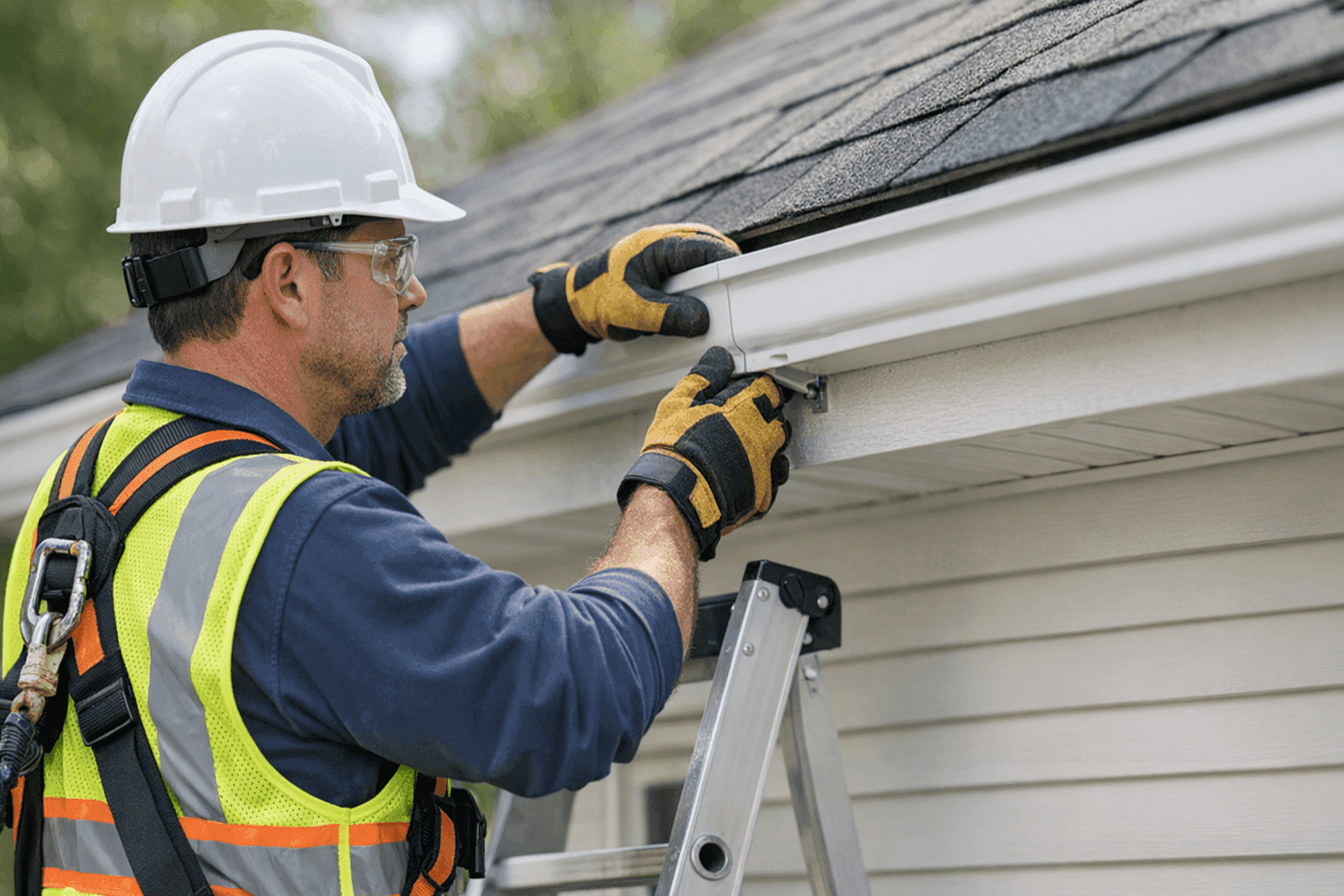
If you’re considering DIY gutter work, remember: One slip can mean a long fall. Use a sturdy ladder, never work alone, and keep tools within easy reach. Wear gloves (gutters can be sharp) and eye protection. Always check for overhead wires.
The Occupational Safety and Health Administration (OSHA) recommends fall protection for work over six feet. When in doubt, call a roofing contractor who’s trained for the job.
DIY vs. Hiring Pros: Which Is Right for You?
Some handy homeowners tackle gutter cleaning or minor repairs themselves. But installation is another story. The difference? Precision and peace of mind.
DIY may be best for:
- Cleaning out debris.
- Securing loose spikes.
- Replacing short sections.
Call a professional for:
- Full installations.
- Major repairs or seamless gutters.
- High or multi-story buildings.
- If you see rust, sagging, or leaks at joints.
A pro brings experience, proper tools, and can spot issues you might miss—like hidden rot or improper slope.
Maintenance Tips: Keep Gutters Flowing All Year
Keeping gutters clear is like brushing your teeth—skip it, and problems build up fast.
Routine Gutter Cleaning:
- Clean at least twice a year—spring and fall are non-negotiable.
- If you have lots of trees, check every three months.
- Use a small scoop, hose, or gutter cleaning attachment.
Seasonal Checks:
- After heavy storms, inspect for clogs, loose brackets, or leaks.
- In cold climates, check for ice dams and icicle buildup.
- Remove debris before winter to prevent freeze-thaw damage.
Smart Add-ons:
- Consider gutter guards to reduce leaf buildup.
- Install splash blocks or extenders at downspouts to keep water away from the foundation.
Need help with cleaning or repairs? See our Gutter Cleaning and Gutter Repair services.
Signs of Gutter Trouble: What to Look For
Gutters rarely shout when they’re unhappy—they drip, stain, or sag instead.
Watch out for:
- Water spilling over the sides during rain.
- Rust, holes, or peeling paint.
- Sagging or separated sections.
- Pools of water near the foundation.
- Mold or mildew on siding or soffits.
Spot these early, and you’ll save yourself a much bigger headache later.
Common Mistakes to Avoid (And How to Dodge Them) 🚨
It’s easy to fall into certain traps. Here are the most frequent mistakes we see—and how to sidestep them:
- Incorrect Slope: Gutters that look level but don’t drain lead to standing water and rust.
- Too Few Downspouts: Water backs up, overflowing at the worst spots.
- Ignoring Small Leaks: Tiny drips turn into big problems.
- Skipping Gutter Cleaning: Debris builds up quickly, especially in the fall.
- Improper Fasteners: Cheap or incorrectly spaced hangers can pull away from the fascia.
- Using the Wrong Materials: Not every gutter suits every roof—shingle, tile, or metal roofing call for different approaches.
If you’re unsure, always ask a pro for advice rather than guess and hope.
When Gutter Issues Become an Emergency
A little drip is one thing. But if your gutters are pouring water into your basement or pulling away from the house after a storm, it’s time to act fast.
Emergency gutter services may be needed if:
- You see water coming inside.
- Gutters are completely detached.
- Downspouts are blocked and water pools at the foundation.
In these cases, call for help before the damage multiplies.
Cost and Time Factors: Setting Realistic Expectations
Gutter installation costs depend on material, home size, and accessibility. Aluminum is generally the most budget-friendly. Expect higher costs for copper or for multi-story buildings.
Time needed:
- Most residential installations take a day or two.
- Repairs or cleaning can often be done in a few hours.
- Commercial jobs or custom fabrication may require more time.
Remember: It’s not just about speed. Quality installation protects your investment for years to come.
Seasonal Gutter Care: Adapting to the Weather
Every season brings its own set of challenges:
- Spring: Seeds, pollen, and spring storms—clear out debris and inspect for winter damage.
- Summer: Watch for sagging during heavy downpours.
- Fall: Leaf season—clean frequently to keep things flowing.
- Winter: Ice dams pose a risk. Ensure gutters are empty before freezes begin.
Regular checks at the start of each season will keep you ahead of the game.
Gutter Upgrades: When to Replace Instead of Repair
Sometimes, patching up your old gutters just isn’t enough. Consider replacement if:
- You see widespread rust or holes.
- Sections are sagging or pulling away.
- You’re remodeling or upgrading your roofing.
- Current gutters can’t handle the volume of water from your roof.
Upgrading to seamless, larger-capacity, or copper gutters can also boost curb appeal and property value.
Gutter Installation and Your Roof: A Team Effort
Gutters and roofs go hand in hand. When replacing or repairing your roof—whether it’s shingle, metal, or tile roofing near you—it’s wise to inspect and upgrade gutters at the same time. Proper flashing, sealants, and downspouts are part of a total water management system.
For new construction, work with your roofing contractor to ensure gutters and downspouts are integrated from the start.
Codes, Safety, and Best Practices
Always follow local building codes for gutter installation. The International Residential Code (IRC) sets minimum standards for drainage and water management. OSHA guidelines help keep everyone safe during installation and repairs.
Never cut corners—proper permits, safe work practices, and code-compliant materials protect both property and people.
Final Thoughts: Gutters That Last, Year After Year
Well-installed, well-maintained gutters are like a good umbrella—they keep you and your investment dry, no matter the weather. Taking the time to install them right and keep them clear will pay off with fewer headaches and a longer-lasting roof.
If you’re ready to upgrade your gutter system, need a hand with cleaning, or want a professional inspection, KRB Contractors Roofing is here to help. Let us keep your home or business protected—rain or shine.
Call KRB Contractors Roofing now — or reach us anytime at 855-528-1936 .