Flat Roof Leak Repair: Solutions for Homes and Businesses
A drip from the ceiling. That dark, spreading stain overhead. When water intrudes from your flat roof, it’s more than an inconvenience—it’s a wake-up call. Homeowners and business managers alike scramble for answers, worried about escalating damage and the cost to fix it.
At KRB Contractors Roofing, we know how stressful leaks can feel. Years of hands-on roofing work have shown us that quick, informed action saves both property and peace of mind. Let’s walk through what causes flat roofs to leak, how to spot the problem, and the smartest steps for repair and prevention.
Why Flat Roofs Leak
Flat roofs have their own set of challenges. Unlike a sloped roof, water doesn’t run off as quickly. Instead, it can linger—pooling in low spots, seeping beneath seams, or sneaking in through tiny cracks. Here’s why leaks happen:
- Ponding Water: Standing water is a flat roof’s worst enemy. Over time, even the toughest membrane may give way.
- Aging Materials: Weather, sun, and temperature swings wear down roof surfaces. Old materials crack and lose flexibility.
- Flashing Failures: Flashing—the metal strips that protect joints and edges—can pull away or rust, leaving gaps.
- Clogged Drains and Gutters: Blockages back up water, forcing it to find other ways out.
- Foot Traffic and Equipment: HVAC units, vents, and routine inspections can bruise or puncture the roof.
- Poor Installation: Sometimes, the original work just wasn’t up to code or used the wrong materials.
One small weakness can open the door to a much bigger problem.
Diagnosing the Problem
Think of leak detection like detective work. The true culprit often hides far from the first visible sign. Here’s how to start:
- Trace the Stain: Water travels. A ceiling mark may be feet away from the entry point.
- Inspect from Above: Safely access the roof. Look for bubbles, blisters, cracks, or punctures.
- Check Seams and Edges: Most leaks start where materials meet or end—around flashing, skylights, or drains.
- Evaluate Drainage: After rain, do you see standing water? Are drains or scuppers blocked?
- Use a Hose (with Caution): Gently spraying sections can help reveal leaks, but don’t flood the roof.
Safety first: never walk on a wet, icy, or unstable flat roof without proper training and gear. Falls are a real risk. The Occupational Safety and Health Administration (OSHA) has clear guidelines you should follow.
Emergency Patching: Stopping the Leak Now 🛑
When water is dripping indoors, time is precious. Here’s what you can do to buy yourself time until professional help arrives:
- Contain the Water: Place buckets or tarps under leaks to protect floors and electronics.
- Clear Off Debris: Remove leaves, twigs, and anything blocking drainage paths.
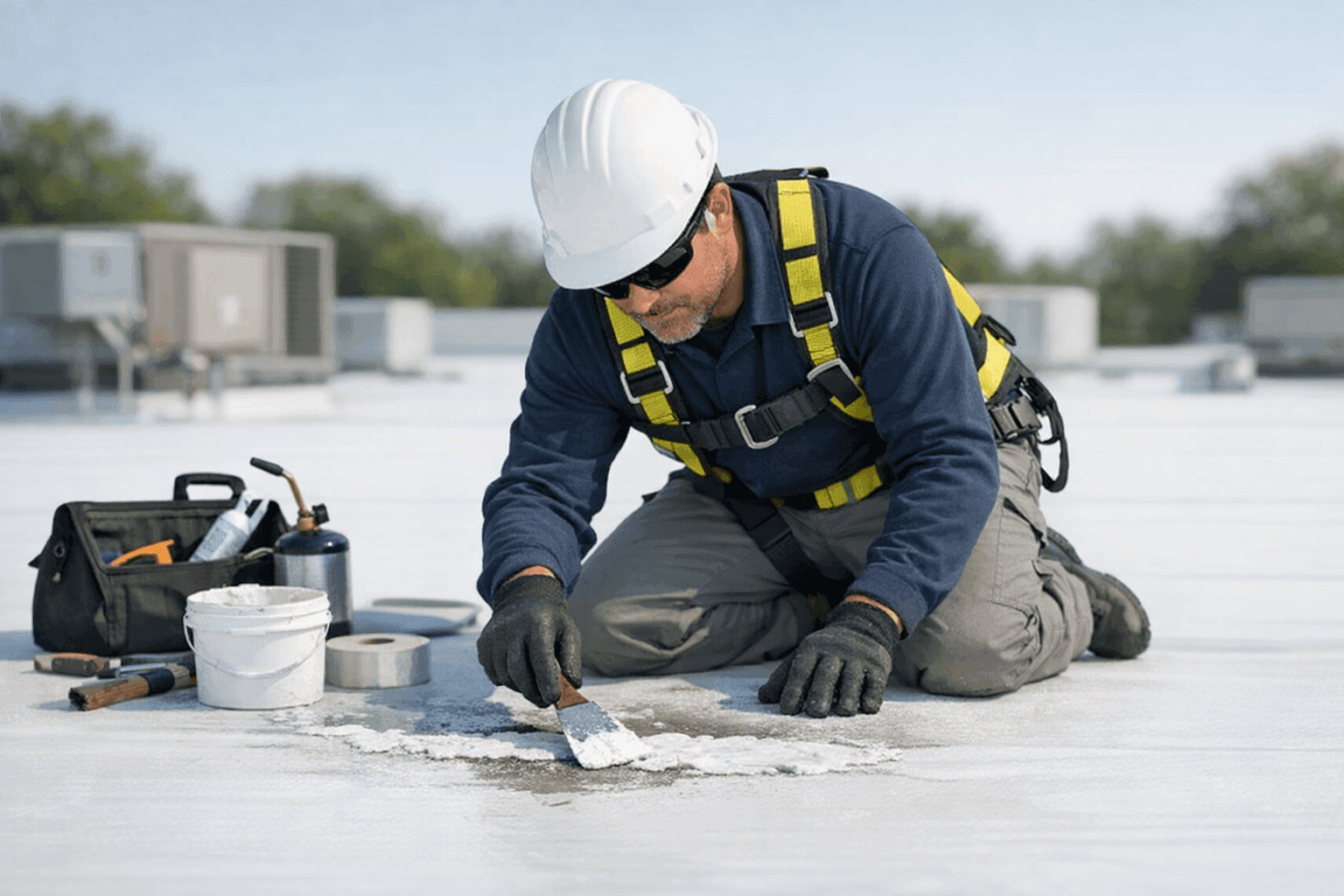
- Temporary Sealants: Roofing tape, patches, or even heavy-duty plastic sheeting can help. Apply only to dry surfaces.
- Don’t Use Roofing Cement in the Rain: It won’t stick well and may trap moisture.
Remember, these are temporary measures. Don’t rely on quick fixes for long. They’re a bandage, not a cure.
Permanent Repair Options
Long-term solutions depend on the size and cause of the leak. Here’s what experienced roofing professionals (like us) consider:
1. Seam Resealing
- Hot Air Welding: For membrane roofs, seams can sometimes be re-welded.
- Roofing Tape: Specialized tape designed for the roof type can reinforce weak areas.
2. Patch and Replace
- Membrane Patch: Cut out the damaged section and install a new patch, properly sealed.
- Replace Flashing: Rusted or loose flashing is removed and new flashing installed.
3. Sealants and Coatings
- Elastomeric Coatings: Applied over the entire roof, these act like a waterproof jacket.
- Liquid Rubber: Fills cracks and gaps, flexes with temperature changes.
For more about this, see our Sealants and Coatings service page.
4. Structural Repair
- Decking Replacement: If water has rotted the roof deck, sections may need to be replaced.
- Insulation Repair: Wet insulation loses effectiveness and can harbor mold.
5. Full Roof Replacement
- When damage is widespread or the roof is past its lifespan, a new roof may be the most cost-effective option. We offer Flat Roofs solutions for both homes and businesses.
Quick Safety Checklist
Before you climb up, pause. Even a flat roof can be risky. Here are simple safety basics:
- Wait for dry, calm weather.
- Wear non-slip shoes and a safety harness if possible.
- Never work alone—have someone nearby.
- Use a sturdy ladder that extends at least three feet above the edge.
- Avoid stepping on soft spots or near skylights.
If in doubt, call a professional. No repair is worth a broken bone.
DIY vs. Call a Roofing Contractor
Some issues are within reach for a handy property owner—a minor patch, clearing a blocked drain, or applying temporary sealant. Others need skill, tools, and an eye for detail that comes with experience.
Call a pro if:
- The leak is large or recurring.
- You see structural damage (sagging, rot, mold).
- You’re not confident about safety.
- The roof is under warranty—DIY work may void it.
For lasting results, the right materials and methods matter. We’ve handled everything from quick Leak Repair to complex rebuilds.
What Pros Do On Arrival
When KRB Contractors Roofing shows up, we don’t just slap on a patch. Our process includes:
- Careful inspection: Locating all points of entry.
- Moisture scanning: Checking for hidden water inside the structure.
- Documentation: Photos and notes, especially for insurance purposes.
- Upfront recommendations: Options explained clearly, with timelines and costs.
- Quality materials: Using what’s right for your specific roof type.
We follow NRCA (National Roofing Contractors Association) best practices and local building codes.
Prevention Tips: Keeping Leaks Away 🛡️
The best leak is the one that never happens. Here’s how you can tip the odds in your favor:
- Schedule Regular Inspections: At least twice a year—spring and fall.
- Keep Roof Clean: Clear leaves, branches, and trash that block drainage.
- Maintain Gutters and Downspouts: Clean and repair them so water doesn’t back up.
- Trim Trees: Overhanging branches can puncture or shade the roof, encouraging moss.
- Look After Flashing: Check for gaps, rust, and loose sections.
- Invest in Quality Coatings: Modern sealants provide a flexible, waterproof surface.
Routine care costs less than emergency repairs. And it can extend the life of your flat roof by years.
When It’s an Emergency
Is water pouring in during a storm? Is electrical equipment at risk? Sometimes, you need help—fast.
- Shut off power to affected areas if safe.
- Move valuables and electronics.
- Call for emergency roofing services. Document the damage for insurance.
KRB Contractors Roofing is equipped for urgent calls—including after-hours.
FAQ: Flat Roof Leaks
How long does a repair take?
Most small leaks can be patched in a few hours. Larger repairs may require a day or more, especially if decking is involved.
Will my business need to close?
Not always. We plan with you to minimize disruption—often working early or late.
Are repairs covered by insurance?
It depends on your policy and the cause. Sudden damage from a storm is usually covered; gradual wear and tear may not be.
How can I tell if I need a new roof?
If your roof is over 20 years old, leaks are frequent, or repairs cost more than half the price of replacement, it’s time to consider a new roof.
Seasonal Considerations
- Winter: Freeze-thaw cycles can open cracks. Snow and ice add weight and hide trouble spots.
- Spring: Melting snow reveals leaks. Heavy rains test your drainage.
- Summer: UV rays speed up aging. High temps cause materials to expand and contract.
- Fall: Falling leaves clog gutters and drains.
Plan inspections and maintenance around the seasons to stay ahead.
Common Mistakes to Avoid
- Ignoring small leaks—water always finds a way to grow the problem.
- Using the wrong patch or sealant for your roof type.
- Forgetting to check gutters and downspouts.
- Walking on wet or icy roofs.
- Postponing repairs until “next season.”
Signs You Need Immediate Help
- Large, spreading stains on ceilings or walls.
- A sudden spike in your water or energy bills.
- Visible mold, mildew, or musty smells.
- Sagging sections of the roof.
- Bubbling, blistering, or cracks in the membrane.
Don’t wait—these are red flags.
Materials and Equipment Used
Professional repairs use:
- Roofing membranes (EPDM, TPO, PVC, BUR)
- Elastomeric coatings
- Heavy-duty flashing
- Moisture meters
- Safety gear: harnesses, anchors, non-slip boots
We match materials to your roof’s design and your building’s needs.
Timeline and Disruption: What to Expect
Every leak is different. A simple patch might mean only a few hours of noise and traffic. More extensive work—decking or insulation replacement—could take days. We work with you to schedule repairs with minimal impact on your home or business.
Costs & Time Factors
- Small patch: Least expensive, often same-day.
- Flashing/Seam repair: Moderate cost, a few hours to a day.
- Full membrane replacement: Higher cost, several days, but longer-lasting.
We provide clear estimates so you know what to expect—no surprises.
Flat Roofs and Local Considerations
If you’re searching for reliable roofing services, our team serves both homes and businesses with skill and transparency. Whether it’s a quick fix or a long-term solution, KRB Contractors Roofing is ready to help.
The Bottom Line
Flat roof leaks don’t have to spell disaster. With fast action, the right repairs, and a little prevention, you can protect your property and your peace of mind. If you spot trouble, don’t wait.
Call KRB Contractors Roofing now — or reach us anytime at 855-528-1936 .