Fire-Resistant Roofing: Materials and Maintenance for Safer Properties
Every year, wildfires and accidental blazes cause billions in property damage across the country. It’s not just a number—it’s peace of mind, memories, and safety at stake. At KRB Contractors Roofing, we know that choosing the right roof is more than a style decision. It’s about protecting your world.
When it comes to fire-resistant roofing, a little foresight goes a long way. Let’s unravel what really matters, from materials to maintenance, so you can sleep easier under a roof built for safety.
Why Fire Resistance Matters
A fire on your roof isn’t just a worst-case scenario—it’s a risk that grows every dry season, every spark, every lightning strike. The National Fire Protection Association (NFPA) reports that nearly 50% of all wildland-urban interface fires start with ember entry on roofs. That means your choice of roofing material can mean the difference between a close call and a catastrophe.
Insurance companies are taking note, too. Homes and businesses with fire-resistant roofs often receive lower premiums. But more importantly, these roofs buy you time—precious minutes that can save lives and property.
The Big Threats: How Fires Start on Roofs
Not all fires start the same way. Here’s what we see most often:
- Wind-blown embers landing on roofs, especially during wildfire season.
- Chimney sparks or nearby brush igniting flammable surfaces.
- Electrical faults or lightning strikes.
- Accumulated debris (leaves, pine needles) acting as kindling in gutters and valleys.
Roofing is your first line of defense. And it must be strong.
Top Fire-Resistant Materials
Some roofs are born ready for fire, while others need help. Here’s a breakdown of roofing materials ranked by fire resistance:
1. Metal Roofing: The Steel Shield 🛡️
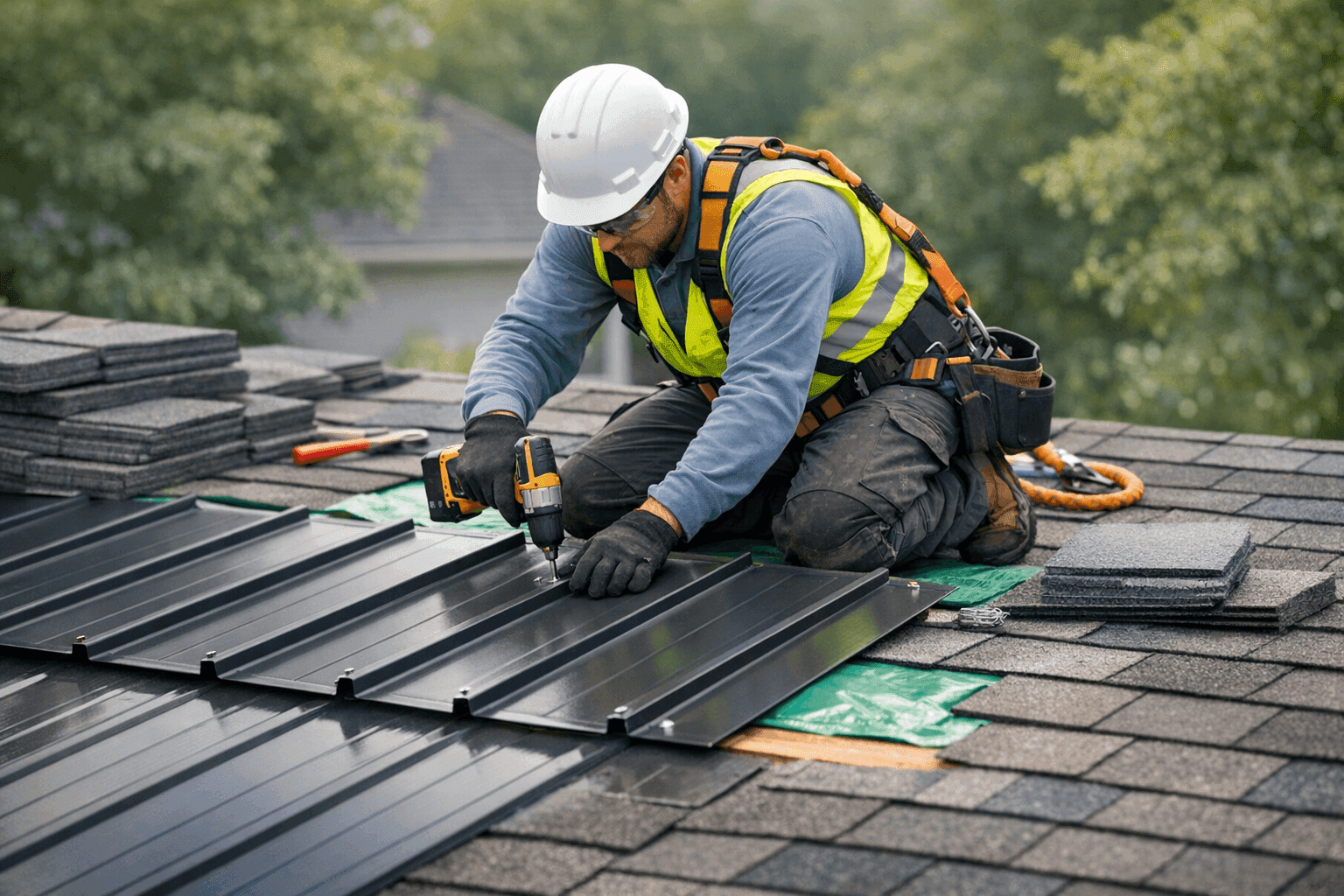
Metal roofs—steel, aluminum, copper—are noncombustible. They won’t ignite, even under direct flame or flying embers. According to the Insurance Institute for Business & Home Safety (IBHS), metal roofing earns Class A fire ratings, the highest standard for fire safety.
Other perks:
- Lasts 40–70 years
- Reflects heat, boosting energy efficiency
- Lightweight and low-maintenance
Interested in this option? Learn more about metal roofing.
2. Tile Roofing: Classic Strength
Clay and concrete tiles shrug off heat and fire. They’re heavy and durable, with proven performance in high-risk zones. The downside? Tiles can crack, so regular inspections are key.
Looking for Tile Roofing near you? We’re here to help.
3. Asphalt Shingles: With a Catch
Standard asphalt shingles vary. Only those with fiberglass mats and special fire-resistant treatments reach Class A fire ratings. Organic-mat shingles, on the other hand, are less fire-safe.
For reliable protection, ask for Class A–rated asphalt shingles when considering shingle roofing.
4. Eco-Friendly Options
Some recycled rubber, slate, and composite roofing products combine fire resistance with sustainability. They’re designed to meet or exceed fire safety codes while reducing environmental impact.
Explore our eco-friendly options to balance safety and sustainability.
5. Flat Roofing Materials
Single-ply membranes (like TPO or PVC) can offer solid fire resistance, but installation matters—a professional touch is crucial to avoid seams or gaps where flames can enter.
The Fire Safety Checklist: What to Look For
Start with the basics. Here’s your quick assessment:
- Check for Class A fire rating on all roofing materials.
- Inspect gutters and valleys for dry debris.
- Ensure all roof penetrations (vents, skylights, chimneys) are properly flashed and sealed.
- Evaluate attic ventilation—unsealed vents can let in embers.
- Confirm downspouts and gutters are metal, not plastic.
Maintenance for Fire Safety
Even the best roof needs a little care. Here’s how to keep your shield strong:
Clean Gutters and Downspouts
Dry leaves and pine needles are fuel. Clean them out—especially before wildfire season or after a storm. If you notice sagging or leaks, schedule gutter cleaning or repair promptly.
Check Sealants and Coatings
Sealants around flashings, skylights, and vents can dry out or crack. Inspect these areas twice a year. Fresh sealant is your silent guardian against stray embers.
Inspect Roof Flashing
Loose or damaged flashing is a major vulnerability. Even a small gap can let in heat and fire. After heavy winds, always check your roof’s flashing.
Schedule Regular Inspections
A professional inspection catches issues you might miss. At KRB Contractors Roofing, our team checks for gaps, cracked tiles, loose shingles, and more—so you’re not caught off guard.
Retrofit Options: Upgrading Older Roofs
Not every property starts with a fire-safe roof. But you can often bring older roofs up to code:
- Install a fire-resistant underlayment beneath shingles or tiles.
- Upgrade to metal or Class A–rated shingles during re-roofing.
- Add metal or cement-fiber panels to vulnerable eaves and overhangs.
- Replace plastic gutters with metal alternatives.
In wildfire-prone areas, local codes may require these upgrades. Check the International Wildland-Urban Interface Code (IWUIC) for specific guidelines.
When It’s an Emergency
A burning smell or visible smoke near your roof? Act fast.
- Call the fire department before investigating.
- Evacuate if safe to do so.
- If you can, safely cut power to the affected area.
Don’t attempt to climb on a burning or smoking roof. Wait for professionals.
Common Mistakes to Avoid
It’s easy to overlook small details that make a big difference:
- Letting debris pile up in gutters.
- Skipping annual roof inspections.
- Ignoring cracked or missing shingles and tiles.
- Using untreated wood shakes in fire-risk zones.
- Forgetting to check attic ventilation for ember entry.
A little attention prevents big losses.
DIY vs. Call a Pro
Some fire safety steps are DIY-friendly. Gutter cleaning, trimming overhanging branches, and debris removal help a lot. But for anything involving roof structure, flashing, or underlayment, it’s best to call in a roofing professional.
Remember: even a small installation mistake can create a fire hazard.
Prevention & Maintenance: A Year-Round Habit
Fire risk isn’t just a summer problem. Winter can bring electrical issues. Spring winds blow in new debris. Make roof safety a part of your seasonal checklist:
- Spring: Inspect for winter damage, clean gutters.
- Summer: Trim trees, check attic ventilation.
- Fall: Clean out leaves, inspect flashings.
- Winter: Watch for ice dams and electrical hazards.
Safety Tips from the Field
Our KRB Contractors Roofing team recommends:
- Keep a 5-foot firebreak around your property (no mulch or woodpiles near walls).
- Use metal mesh screens over attic and soffit vents.
- Store flammable items away from exterior walls and roofs.
- Have fire extinguishers accessible—one on every floor.
- Review your roof’s fire rating and upgrade if needed.
Safety Stats: The Numbers Tell the Story
- According to the IBHS, homes with Class A roofs are up to 85% less likely to experience catastrophic fire loss.
- The National Roofing Contractors Association (NRCA) reports that fire-resistant roofing can add significant value to a property, especially in high-risk zones.
- Studies show metal and tile roofs can provide up to 2 hours of fire resistance, giving firefighters more time to respond.
Timeline & Disruption: What to Expect
Installing fire-resistant roofing isn’t an overnight process. Depending on the size and complexity, replacement or retrofitting can take several days to a week. Expect some noise and activity, but professional crews ensure minimal disruption.
For businesses, we work around your schedule to keep operations running smoothly.
FAQ: Fire-Resistant Roofing
Q: What’s the most fire-resistant roofing material?
A: Metal roofing and clay or concrete tile top the list. Both offer Class A fire ratings.
Q: Do I have to replace my whole roof?
A: Not always. In some cases, adding a fire-resistant underlayment or upgrading specific sections can boost protection.
Q: How do I know my roof’s fire rating?
A: Check your roofing material’s product info—or call your local building department.
Q: Will a fire-resistant roof look good?
A: Modern materials come in many styles and colors. You don’t have to sacrifice curb appeal for safety.
Q: Can fire-resistant roofing help with insurance?
A: Yes. Many insurers offer discounts for homes and businesses with Class A roofs.
Ready to Boost Your Roof’s Safety?
Fire doesn’t wait. Neither should you. Whether you’re building new, replacing an old roof, or just looking for peace of mind, KRB Contractors Roofing is here to help. For property owners in every region—including those looking for roofing services in the Casper area—our team brings clarity and care to every project.
Call KRB Contractors Roofing now — or reach us anytime at 855-528-1936 .