Downspout Installation: Ensuring Proper Drainage for Your Property
When rain pours, it doesn’t just tap on your roof. It races, gathering momentum, seeking the fastest route down. If your downspouts aren’t ready, water can pool at your foundation—eating away at what keeps your home or business standing strong.
At KRB Contractors Roofing, we get how quickly a simple drainage issue can snowball, threatening everything from your landscaping to your structure. Our team has seen it all—clogged gutters, missing downspouts, flooded basements. We know what works and what fails, and we’re here to walk you through it.
The Importance of Downspouts: More Than Just Pipes 🌧️
Downspouts are your property’s unsung heroes. Like veins carrying water away from vital organs, they direct runoff safely away from your building. Without them, water can:
- Soak your foundation, leading to cracks and costly repairs.
- Turn flowerbeds into swamps.
- Cause mold, wood rot, and even undermine driveways and walkways.
The International Association of Certified Home Inspectors warns that poor drainage is a leading cause of basement water intrusion. That’s why properly installed downspouts aren’t just a good idea—they’re essential.
How Downspout Installation Works: Step by Step
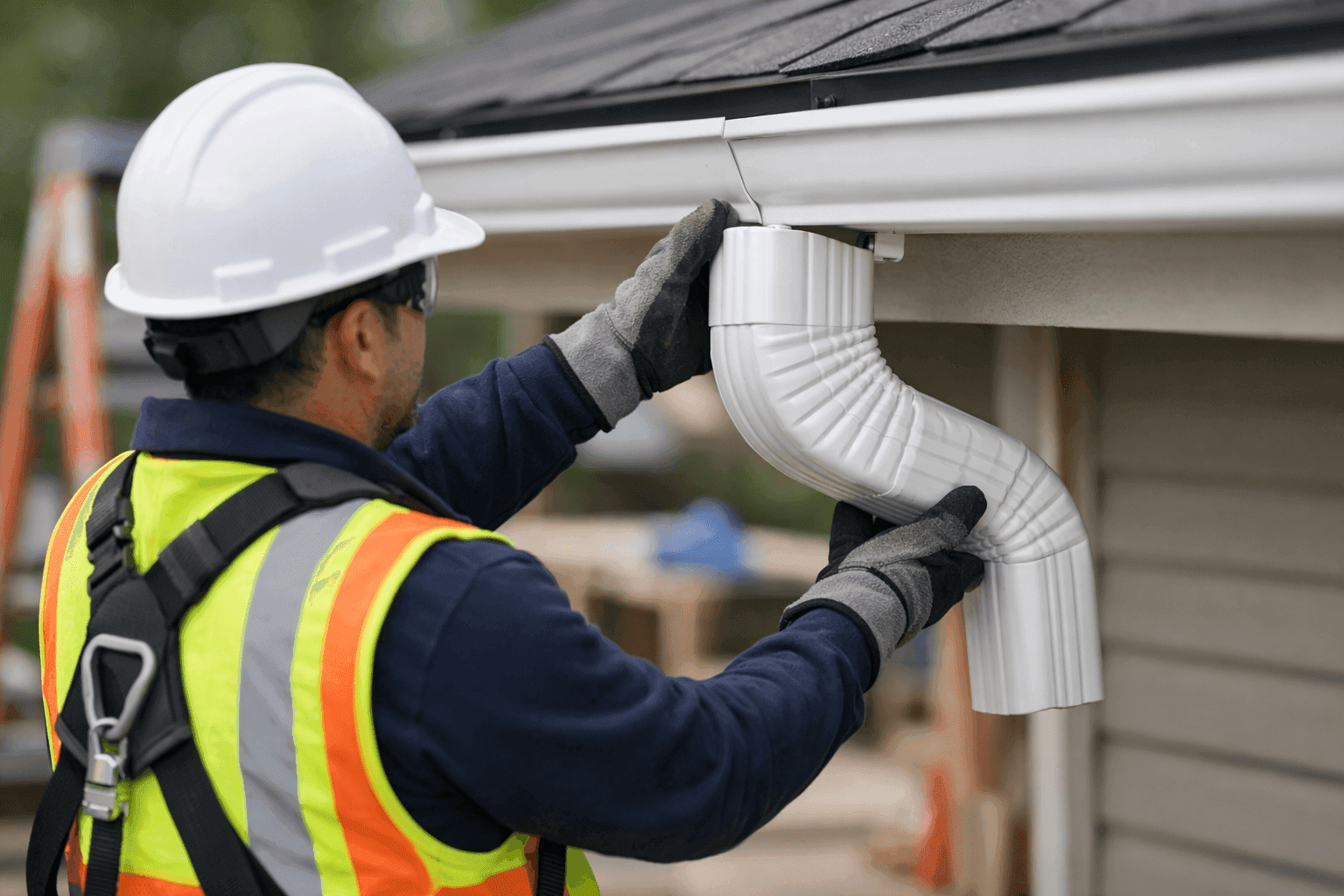
Great downspout installation is like setting up a well-tuned orchestra. Every section plays a part. Here’s how professionals handle it:
- Assessment: Evaluate roof size, gutter capacity, and landscape slope.
- Materials: Choose durable downspout materials—aluminum, steel, or even copper for style.
- Measure & Mark: Plan precise placement for optimal flow, avoiding bends that slow water down.
- Cut & Attach: Securely cut downspout sections and attach them to gutter outlets.
- Direct the Flow: Ensure water exits at least 4–6 feet from your foundation—sometimes using extensions or splash blocks.
- Seal & Secure: Weatherproof all joints and brackets, checking for leaks.
- Test: Simulate rainfall to watch the flow in action.
Every step matters. One loose bracket, one poorly aimed outlet, and trouble isn’t far behind.
Placement Best Practices: Getting the Angles Right
Where you put downspouts is as vital as having them at all. Here’s what matters:
- Every 20–40 feet of gutter: Add a downspout to keep gutters from overflowing.
- Slope: Point spouts away from the building—never toward driveways or walkways.
- Extensions: Use them if water can’t safely reach a drain or slope.
- Avoid obstacles: Landscaping features, air conditioners, or walkways shouldn’t block the path.
Think of water as a clever trickster—it will always find the path of least resistance, even if that’s into your basement.
Common Downspout Installation Mistakes (And How to Avoid Them) 🚫
Some errors show up fast. Others take months. Here are mistakes we see most:
- Too few downspouts: Oversized gutters but nowhere for the water to go? Overflow and erosion follow.
- Improper slope: Flat or uphill downspouts let water back up, causing leaks.
- Poor sealing: Gaps and loose joints invite leaks and ice dams in winter.
- Short discharge: Water dumped too close to the house equals foundation trouble.
- Ignoring local codes: Every region has building codes—make sure your installation meets them.
The National Roofing Contractors Association (NRCA) outlines these best practices in their manuals and training.
Signs Your Drainage Isn’t Doing Its Job
How do you know you’ve got a drainage problem? Watch for these telltale clues:
- Pools of water near your foundation after rain
- Soil erosion or washed-out flower beds
- Water stains or mildew in basements or crawlspaces
- Overflowing gutters or sagging sections
- Peeling paint or rust on exterior walls near downspouts
If you spot any of these, it’s time to act. Don’t wait for water damage to make the decision for you.
Real-World Example: When Downspouts Save the Day
We once handled a commercial roofing project where the client suffered repeated basement flooding. The culprit? Downspouts installed just inches from the foundation. Our team redirected the water a safe distance away and repaired the eroded landscaping. The next storm? Dry as a bone inside.
This isn’t rare. The right downspout installation can save you thousands in repairs and endless frustration.
Quick Safety Checklist Before You Begin 🦺
Thinking about tackling downspout work yourself? Safety first:
- Use a sturdy ladder—never balance on furniture or makeshift supports.
- Wear gloves and eye protection, especially when cutting metal.
- Avoid working in wet or windy weather.
- Don’t lean too far—move the ladder as needed.
Remember: If you’re uncomfortable or unsure, it’s safer to call a professional.
DIY vs. Professional Downspout Installation
Some homeowners are handy. If you have the right tools and confidence, small repairs might be doable. But full installations—especially for multi-story or commercial buildings—require skill, safety equipment, and knowledge of local codes.
Pros bring:
- The right tools (snips, sealants, brackets, levels)
- Expertise in water flow and building codes
- Fast, efficient installation with minimal disruption
If you want to avoid costly mistakes, professional installation is a solid investment.
What Pros Do On Arrival
When you call KRB Contractors Roofing for downspout installation, here’s what you can expect:
- Inspection of your current gutter and drainage system
- Recommendations for placement and materials
- Clear, upfront explanation of what needs to be done and why
- Careful, tidy work with attention to your landscaping and property
No guesswork. Just solutions.
Prevention & Maintenance: Keep Water Flowing Smoothly
Downspouts aren’t a set-it-and-forget-it feature. They need attention. Here’s how to keep them working:
- Clean gutters and downspouts twice a year—spring and fall are best.
- Check for clogs after heavy storms or when leaves start falling.
- Inspect joints and brackets for rust or looseness.
- Look for signs of animal nests or insect blockages.
- Replace damaged sections promptly.
Routine care costs little compared to water damage repairs.
Costs & Time Factors: What to Expect
Downspout installation costs depend on materials, building size, and complexity. Aluminum is common and affordable, while copper and steel cost more but last longer. Labor is a factor, especially for tall or tricky buildings.
Most installations take a few hours to a day. Add time for repairs or complex routing.
When It’s an Emergency: Act Fast
If you notice severe gutter overflow, water pouring near your foundation, or leaks inside after rain, don’t wait. Emergency services—like those offered by KRB Contractors Roofing—can quickly stop active leaks and prevent further damage.
Seasonal Considerations: Rain, Snow, and Clogged Downspouts 🏠
Spring and fall bring heavy rainfall and falling leaves—prime time for clogs. In winter, ice dams can block downspouts, causing backup and roof damage. Regular inspection and cleaning are your best defense.
Frequently Asked Questions
How often should downspouts be cleaned?
Twice a year is recommended, but check after big storms or when surrounded by trees.
Can downspouts be rerouted?
Yes—pros can adjust placement, add extensions, or change outflows to suit your landscaping.
Are there eco-friendly downspout options?
Absolutely. Rain barrels, permeable splash blocks, and water gardens can all help you reuse runoff safely.
Assess Your Drainage: Is It Time for Help?
Walk your property after the next rain. Are there puddles where there shouldn’t be? Is water moving away from your foundation, or pooling too close? If anything feels off, don’t wait.
For more on keeping every part of your roof in top shape, see our gutter repair service page.
If you’re in the area and looking for roofing services, KRB Contractors Roofing is ready to help.
Call KRB Contractors Roofing now — or reach us anytime at 855-528-1936 .