How to Safely Access and Work on Your Roof: Safety Tips for DIYers
Climbing onto your roof can feel a bit like stepping onto a tightrope. One wrong move and, well, gravity takes over. If you’re like most homeowners, you want to save money and fix things yourself. But roofing isn’t just another DIY job—it’s risky, and mistakes can be costly or even dangerous.
At KRB Contractors Roofing, we know how tempting it is to fix that leak or inspect those shingles yourself. That’s why we’re sharing real, actionable safety tips. Let’s keep your feet (mostly) on the ground and your family out of the ER.
The Risks of Roof Work
Working on a roof is not like fixing a squeaky door. The risks are real and immediate. Even on a single-story home, a slip can mean serious injury.
- Falls are the leading cause of construction-related deaths (OSHA).
- Unstable surfaces—like wet tiles or loose shingles—can turn solid footing into a banana peel moment.
- Sharp tools and exposed nails are everywhere.
- Electrical hazards from overhead wires or hidden attic cables can shock or burn.
- Heat stroke and dehydration sneak up quickly on summer days.
If you don’t respect these dangers, a simple repair can become a nightmare. Tile Roofing near you, and across the industry, always starts with safety first. 🛑
Quick Safety Checklist
Before you even think about climbing up, run through this checklist:
- Check the weather forecast (more on that soon).
- Inspect your ladder for damage or missing parts.
- Wear grippy, closed-toe shoes.
- Use gloves and eye protection.
- Secure all loose tools and materials.
- Let someone know you’ll be working up high.
- Clear the ground area below.
- Have your phone nearby, just in case.
Simple steps, but every one counts.
Ladder Safety: Your First and Last Line of Defense
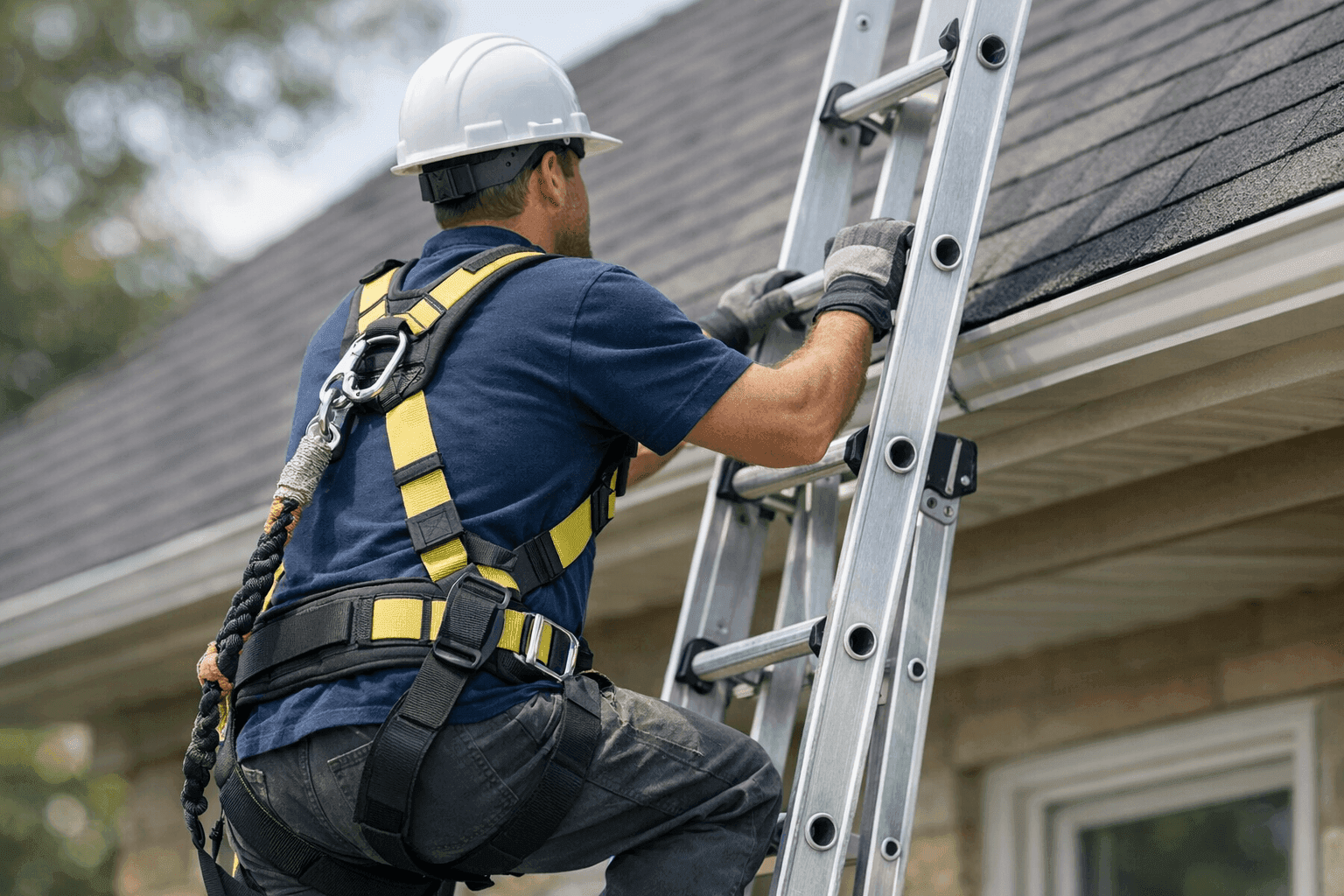
Think of your ladder as your lifeline. Most falls happen before you even touch the roof. Here’s how to keep that from happening:
- Always use a ladder rated for your weight and the job (Type I or IA for roofing).
- Place it on level, firm ground. If the earth is soft, use a ladder stabilizer.
- The ladder should extend at least 3 feet past the edge of the roof.
- Maintain a 4:1 angle—every 4 feet of height, the base moves 1 foot out.
- Keep both hands free when climbing. Carry tools in a belt or hoist them up.
Never lean or overreach. If you can’t touch your work without stretching, climb down and reposition.
Proper Footwear and PPE: Dress Like Your Safety Depends On It
Not all shoes are created equal, especially when it comes to roofing. Leave sandals and sneakers inside. Wear boots or shoes with soft rubber soles. They grip shingles, tile, and metal better than hard, slick soles.
Personal Protective Equipment (PPE) is your armor:
- Gloves protect from sharp edges and hot surfaces.
- Safety glasses shield your eyes from dust and debris.
- Long pants and sleeves keep your skin safe.
- Consider a harness if your roof is steep or tall.
A little discomfort beats a trip to urgent care.
Weather Considerations: Never Ignore Mother Nature ☀️
Roofs are slippery when wet. Even a light drizzle can turn shingles and tiles into ice rinks. Wind gusts? They’ll throw off your balance in a heartbeat.
- Dry days are best, preferably with mild temps.
- Avoid roofing work in extreme heat—shingles soften, and dehydration hits fast.
- Morning dew or frost? Wait until the surface dries.
- If storms are coming, postpone your project.
Check local weather and give yourself a wide safety margin.
Spotting Hazards Before You Start
Before you climb, take a slow walk around your property. Look for:
- Overhead power lines near where you’ll set up.
- Tree branches that could get in your way.
- Rotting or damaged decking (soft spots underfoot).
- Loose or missing shingles that could give way.
If something feels off, don’t ignore it. Your instincts are your best early warning system.
Tools and Materials: Use Only What You Need
Don’t overload yourself with tools. Bring up only what you can safely carry or hoist. Keep tools in a belt or bucket—never loose on the slope.
Check that your tools are in good condition. Dull blades slip. Worn hammers bounce. Tighten all fasteners and double-check extension cords for fraying.
Remember, the fewer trips up and down, the safer your day.
Common DIY Mistakes (and How to Dodge Them)
We’ve seen it all. Some of the most common missteps include:
- Overreaching instead of moving the ladder.
- Working alone with no one to spot you.
- Ignoring small leaks that turn into big problems.
- Removing too many shingles or tiles at once.
- Underestimating the steepness of the roof.
Treat your project like a chess game—think a few moves ahead.
Seasonal Considerations: Summer, Winter, and In-Between
Every season brings its own risks:
- Spring: Surfaces may be slick from rain. Watch for hidden algae or moss.
- Summer: Heat exhaustion is real. Take breaks, drink water, and wear a hat.
- Fall: Leaves and debris create slip zones. Clear the surface before you start.
- Winter: Ice and snow? Don’t even think about it. Wait until everything is dry and stable.
Timing is everything. A little patience prevents a lot of pain.
When to Call a Pro
Some jobs just aren’t meant for DIY. If you notice:
- Structural sagging or widespread damage.
- Multiple leaks or water stains inside.
- Damaged flashing around chimneys, skylights, or walls.
- Issues with flat roofs or complex tile layouts.
- Anything that makes you stop and second-guess yourself.
There’s no shame in reaching out. For major roof-repair, detailed inspections, and preventative-maintenance, trained teams like KRB Contractors Roofing have the right equipment and know-how.
What Pros Do on Arrival
When a professional roofing contractor shows up, the first thing they do is a safety assessment. We check ladder placement, roof condition, and possible hazards. We use harnesses, roof anchors, and OSHA-approved gear. Each step is deliberate. No rushing, no shortcuts.
That’s why professional roofing services save time—and sometimes lives.
Prevention & Maintenance: The Key to Fewer Emergencies
Routine maintenance catches small issues before they become big. Clean gutters. Check flashing. Remove debris. Schedule an annual inspection to keep surprises to a minimum.
If you’re searching for "roof repair" or "Tile Roofing near you," remember: a little prevention goes a long way.
Signs of Trouble: What to Look For
Don’t ignore the warning signs. These mean action is needed:
- Water stains on ceilings or walls.
- Missing, curled, or cracked shingles.
- Rusted or loose flashing.
- Moss or algae buildup.
- Sagging roof lines.
Spot these early, and you’ll save more than just money.
Emergency Situations: What Counts as Urgent?
Some roof problems just can’t wait:
- After a major storm, check for missing shingles, hail damage, or leaks.
- If you see daylight through your attic, act fast.
- Large branches on your roof? Get help removing them safely.
- Sudden water inside after a rainstorm is a call-to-action moment.
In a real emergency, don’t risk it—call KRB Contractors Roofing right away.
Timeline and Disruption: How Long Will It Take?
Small repairs may take a few hours. Larger projects, like replacing underlayment or flashing, could stretch over several days. Factor in weather delays and cleanup. If you’re working on a commercial property, plan around business hours to minimize disruption.
Costs: Money Well Spent on Safety
DIY roof work can save money, but safety equipment and quality materials are worth every penny. Don’t skimp on sturdy ladders, harnesses, and slip-resistant shoes. If you’re budgeting for bigger jobs, get a professional assessment first.
Frequently Asked Questions
Can I walk on my tile roof?
Tile can crack easily under weight. Step only on the lower third of each tile, and wear soft-soled shoes.
How do I spot a leak?
Check for stains or dampness in your attic or ceiling. Water has a way of traveling, so look for entry points higher up.
What’s the best time of year for roof repairs?
Spring and early fall offer mild weather and safer footing.
Should I clean my own gutters?
If you’re comfortable on a ladder and the roof edge isn’t high, yes. Otherwise, consider calling a pro.
Final Word: Safety Comes First
Roofing isn’t just another chore. It’s a high-stakes balancing act that demands respect for safety at every step. If you’re ever unsure, don’t gamble with your health or your home.
For peace of mind and safe, reliable results, connect with your local roofing contractor. KRB Contractors Roofing is here to help with every shingle, tile, and flashing—so you can keep both feet on solid ground.
Call KRB Contractors Roofing now — or reach us anytime at 855-528-1936 .